

Start Your Law Firm Marketing Coordinator Career With the Right Foundation
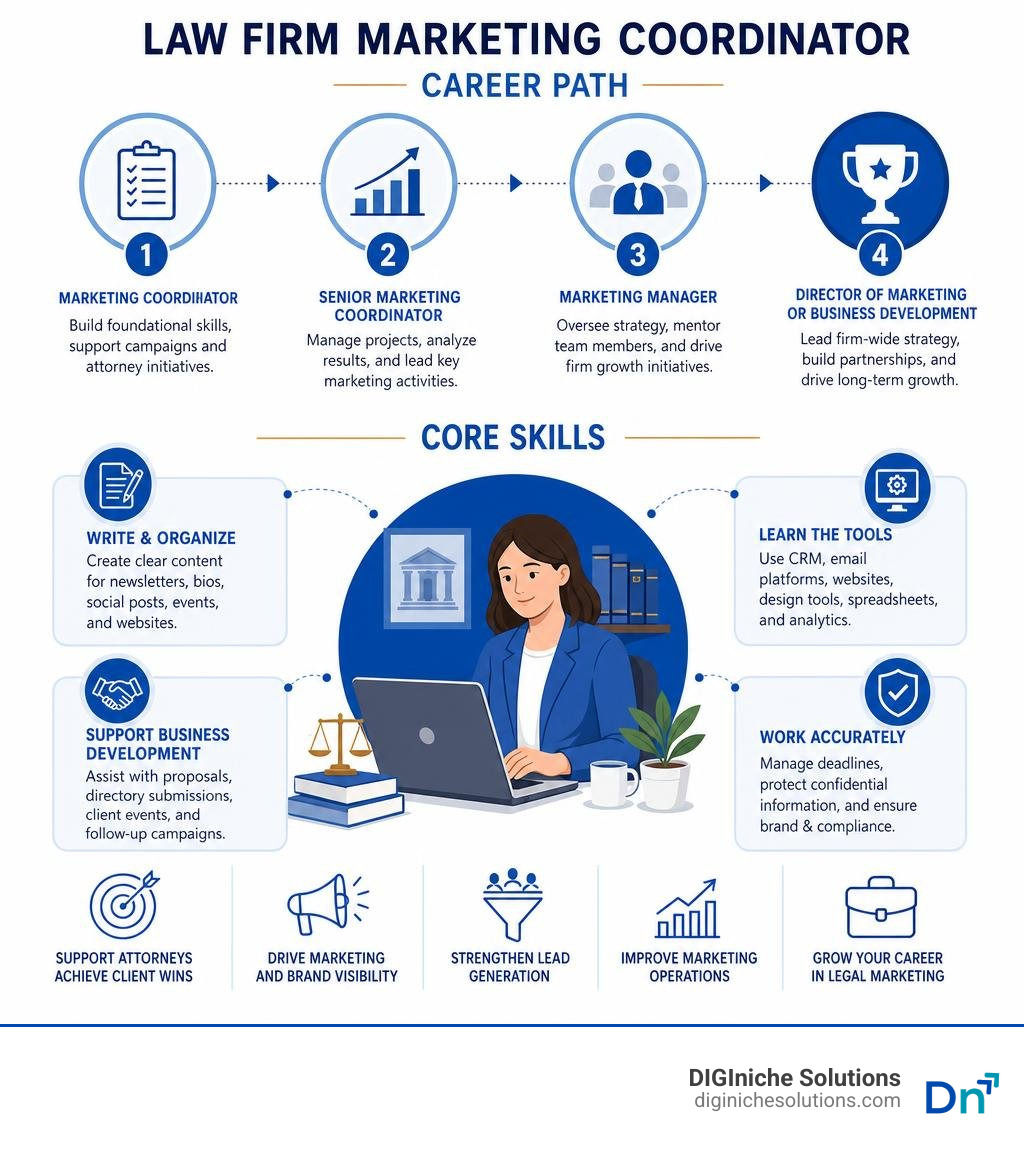
A law firm marketing coordinator helps lawyers win and keep business by turning firm goals into organized marketing work. To get started, build skills in these four areas:
- Write and organize: Draft newsletters, attorney bios, social posts, event materials, and website updates.
- Learn the tools: Become comfortable with a CRM, email platform, WordPress, Canva, spreadsheets, and web analytics.
- Support business development: Help attorneys prepare pitches, directory submissions, client events, and follow-up campaigns.
- Work accurately: Manage competing deadlines, protect confidential information, and check every public-facing item for brand and legal advertising compliance.
This is not simply a social media job. A coordinator may clean CRM data in the morning, help an attorney prepare an RFP at midday, and coordinate a client event or email campaign in the afternoon. In larger firms, one coordinator can support dozens of attorneys; in a small firm, the role can be the link between day-to-day marketing activity and a more reliable pipeline of qualified cases.
Digital marketing and automation have expanded the position. Coordinators now help connect website leads, intake follow-up, email nurturing, local search visibility, and campaign reporting, while still handling the relationship-focused work that software cannot replace.
I am Frank Demming, and for more than a decade I have helped law firms use SEO, PPC, website optimization, and lead-generation systems to create more consistent case flow. This playbook explains how a law firm marketing coordinator can build the practical skills needed to support attorneys, improve marketing operations, and grow into a larger legal marketing role.
Understanding the Role of a Law Firm Marketing Coordinator
The legal sector has undergone a rapid evolution over recent years. According to Law.com legal news reporting, law firms of every size now operate in an competitive landscape where reputation alone is no longer enough to maintain a thriving caseload. Legal practices require modern visibility systems, agile marketing workflows, and structured business development engines to stand out in crowded practice areas.
At the center of these operational engines sits the marketing coordinator. Within the law firm hierarchy, this professional acts as the operational bridge connecting high-level growth strategies with tangible, daily marketing execution. Whether supporting an AmLaw 200 firm across multiple service lines or managing growth for a dynamic regional practice, coordinators translate attorney ambitions into structured campaigns, compelling thought leadership, and polished collateral.
Core Responsibilities of a Law Firm Marketing Coordinator
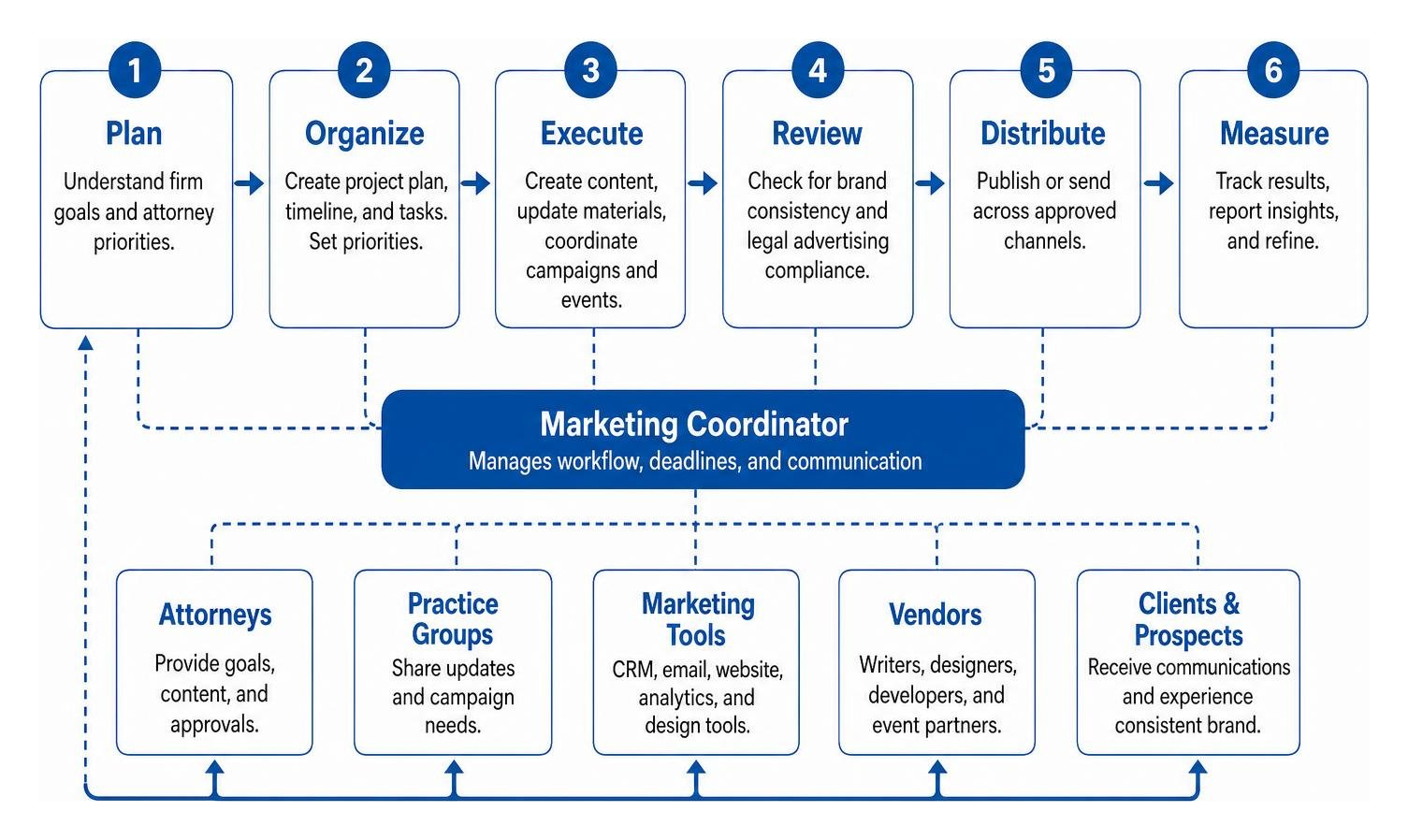
While no two days look identical, the foundational responsibilities of a coordinator center on brand consistency, client communication, and attorney enablement:
- Directory Submissions and Accolades: Researching, drafting, and organizing submissions for critical ranking directories (such as Chambers and Best Lawyers), while managing nominations for legal industry honors.
- Attorney Biography Maintenance: Updating attorney credentials, representative matters, speaking engagements, and badges across firm websites and professional profiles.
- Content and Thought Leadership Production: Editing legal alerts, formatting client advisories, publishing practice-area blogs, and applying engaging digital marketing for lawyers content marketing tips to turn complex case law into accessible reading for prospective clients.
- Social Media & Digital Channel Management: Scheduling firm-wide updates on professional platforms, tracking engagement analytics, and amplifying partner-level milestones.
- Event Planning and Logistics: Coordinating client seminars, Lunch & Learn panels, webinar broadcasts, and firm social functions from invitations through post-event follow-up workflows.
- Ethical and Brand Compliance: Reviewing all public marketing assets to ensure adherence to state bar advertising guidelines and strict internal brand style standards.
Law Firm Marketing Coordinator vs. Marketing Manager
Understanding where this position sits relative to a marketing manager clarifies expectations and sets clear milestones for career advancement.
While a marketing manager oversees overarching strategic direction, develops departmental budgets, and manages vendor contracts, a coordinator focuses on executing tactical deliverables, driving daily project progress, and managing administrative pipelines.
| Operational Area | Law Firm Marketing Coordinator | Law Firm Marketing Manager |
|---|---|---|
| Primary Focus | Daily tactical execution and workflow delivery | Strategic campaign design and high-level goal setting |
| Decision Authority | Implements established marketing plans | Approves campaign strategies and directs project scopes |
| Budget Oversight | Tracks expense logs and invoices | Sets practice-group marketing budgets and forecasts spend |
| Attorney Interaction | Gathers bios, pitch materials, and event details | Advises partners on strategic business development plans |
| Vendor Management | Coordinates assets and assets delivery with agencies | Negotiates agency contracts and evaluates vendor ROI |
Essential Skills, Tech Stacks, and Daily Workflows
Executing legal marketing requires balancing technical software proficiency with refined interpersonal diplomacy. Lawyers are exceptionally busy professionals whose primary focus is billable legal work. A successful coordinator creates effortless workflows that allow attorneys to build their personal books of business without getting bogged down by administrative tasks.

Required Qualifications and Transferable Backgrounds
Most law firms seek candidates with a Bachelor’s degree in Marketing, Communications, Public Relations, English, or Business Administration. However, non-traditional backgrounds often yield exceptional candidates. Professionals transitioning from executive administrative roles, legal assistant positions, public relations agencies, or creative production frequently bring the exact project management, organizational discipline, and poise required in high-stakes legal environments.
For instance, reviewing the professional profile of legal marketer Ashley Cole illustrates how hands-on experience, organizational agility, and dedication to attorney enablement form a powerful foundation for managing multi-office initiatives.
Beginners can accelerate their career readiness by completing targeted industry training, such as the Legal Marketing Association (LMA) Quickstart program, alongside standard certifications in digital platforms like HubSpot or Google Analytics.
The Legal Marketing Software and Automation Stack
Modern legal marketing relies heavily on a specialized stack of digital tools. Coordinators should build comfort and fluency across these essential platforms:
- Customer Relationship Management (CRM): Platforms such as HubSpot, Salesforce, or Clio Manage store prospective client data, track attorney interactions, and run automated follow-up sequences. Regular CRM data audits and bounce-back reviews are vital to keep databases clean.
- Content Management Systems (CMS): Managing website updates, bios, and blog articles requires working knowledge of platforms like WordPress, including basic HTML formatting and image optimization.
- Visual Design & Collateral Creation: Canva and Adobe Creative Cloud (InDesign, Photoshop, Illustrator) are industry standards for designing branded event flyers, pitch presentations, and social graphics.
- Email Marketing & Automation: Tools like Constant Contact and Mailchimp power segmented newsletters, legal alert broadcasts, and drip campaigns that target and connect through law firm internet marketing.
- Proposal Management Software: Solutions like QorusDocs help coordinate firm-wide experience databases and streamline repetitive RFP drafting.
Daily Attorney Workflows and Business Development
A primary goal of legal marketing is supporting revenue generation. When prospective clients reach out, speed is crucial—industry research reveals that 66% of people expect a response from a law firm within a single day, and many retain legal counsel within hours of beginning their search.
Coordinators directly assist partner-level business development by:
- Drafting Pitch Decks and RFP Responses: Assembling standardized firm backgrounders, case studies, attorney bios, and fee schedules to meet competitive proposal deadlines.
- Optimizing Lead Intake Speed: Working with intake personnel to confirm that automated consultation confirmations and email thank-you sequences fire instantly.
- Structuring Post-Event Outreach: Ensuring business cards and consultation inquiries gathered during seminars or industry panels are immediately added into CRM follow-up funnels.
- Protecting Practice-Area Messaging: Ensuring marketing collateral avoids common pitfalls, such as unsubstantiated expertise claims, by avoiding costly mistakes in legal marketing that could violate state bar advertising regulations.
Compensation, Career Advancement, and Agency Collaboration
Legal marketing is a thriving, specialized career discipline. The Legal Marketing Association (LMA) now represents marketing and business development professionals across more than 90% of the top 200 U.S. law firms, with over 2,400 employers posting opportunities on its dedicated career boards.

Salary Expectations and Regional Compensation Trends
Compensation for marketing coordinators varies based on firm size, practice specialty, and geographic location. Entry-to-mid level roles generally offer hourly rates between $25.00 and $30.00 per hour (translating to approximately $52,000 to $62,400 annually for standard 40-hour schedules).
In major metropolitan hubs, compensation tiers scale significantly with experience. For example, in the Manhattan market, there are over 550 open legal marketing positions listed on platforms like LinkedIn, with more than 326 positions offering compensation packages exceeding $80,000 annually.
Job seekers exploring regional opportunities can explore active New Jersey legal marketing job listings or browse open legal marketing roles in Manhattan to evaluate current market requirements across mid-size practices and AmLaw institutions alike.
Career Growth and Long-Term Advancement Pathways
The coordinator position serves as a reliable launchpad for diverse, high-earning career paths in professional services:
- Senior Marketing Coordinator / Specialist: Deepening expertise in specialized areas like practice-group marketing, PR, or digital advertising.
- Business Development Manager: Leading RFP strategies, pitch teams, and strategic client pursuit initiatives directly alongside practice group leaders.
- Director of Marketing / Chief Marketing Officer (CMO): Assuming full firm-wide leadership over multi-million-dollar marketing budgets, firm rebranding initiatives, and regional office expansions.
- Fractional Marketing Consultant: Providing external strategic advisory services to small and boutique firms seeking executive-level marketing direction on a retainer basis.
Collaborating with External Marketing Agencies and Vendors
One person cannot single-handedly run every technical facet of a law firm’s growth strategy. A single coordinator might manage collateral for dozens of attorneys while coordinating firm-wide administrative tasks. Attempting to also execute technical search engine optimization, pay-per-click ad management, custom website development, and local map-pack ranking alone often leads to burnout and diluted results.
The most effective coordinators view themselves as the internal project lead who directs specialized external partners. By knowing how to maximize your law practice marketing budget and collaborating with law firm marketing consultants, coordinators can delegate time-intensive technical tasks while focusing their internal bandwidth on direct attorney support, relationship nurturing, and firm operations.
Frequently Asked Questions About Legal Marketing Careers
What does an entry-level legal marketing coordinator do on a daily basis?
An entry-level coordinator balances daily administrative and creative tasks. A typical day includes updating attorney bios on the website, formatting and scheduling email newsletters, organizing slides for upcoming client presentations, performing routine CRM contact cleanups, and drafting basic social media announcements.
What software skills should a beginner legal marketing coordinator prioritize?
Beginners should focus on mastering a modern legal CRM (such as HubSpot or Clio), a website Content Management System (primarily WordPress), an email delivery tool (like Constant Contact or Mailchimp), and fundamental graphic design software (Canva or Adobe InDesign). Solid spreadsheet skills in Microsoft Excel or Google Sheets are also essential for reporting campaign performance.
How do legal marketing coordinators support law firm revenue?
Coordinators support revenue by streamlining the business development pipeline. They ensure rapid intake responses to inbound inquiries, build polished pitch packets for competitive bids, maintain clean CRM contact data for ongoing referral nurturing, and execute post-event communication sequences that convert event attendees into retained clients.
Conclusion
Launching a career in legal marketing offers a dynamic intersection of brand strategy, project management, and direct business development. As law practices continue to embrace digital client acquisition channels, the demand for organized, tech-savvy marketing professionals will only grow.
By mastering the core tech stack, building clear communication habits with attorneys, and executing structured legal marketing plans, you position yourself as an indispensable asset to your firm’s growth engine.
Whether you are building your internal team’s capabilities or seeking full-funnel digital growth, you can also partner with DIGIniche Solutions to elevate your practice with advanced New Jersey legal SEO strategies powered by our proprietary V.E.R.A. Formula.
