

What “Attorney City Specific” Really Means (And Why It Matters for Your Firm)
Finding the right attorney city specific to your legal needs — whether you’re a resident, a business owner, or a law firm trying to attract local clients — comes down to understanding how municipal legal services work and who they actually serve.
Quick answer: What does “attorney city specific” mean?
| Situation | Who to Contact |
|---|---|
| You’re a resident needing legal help | A private attorney licensed in your city/state |
| You need to understand local ordinances | A private attorney specializing in local government law |
| You’re a business dealing with zoning or permits | A land use or municipal law attorney in your city |
| You want to sue or deal with the city | A private attorney — not the city attorney |
| You’re a city official needing legal advice | The city attorney’s office |
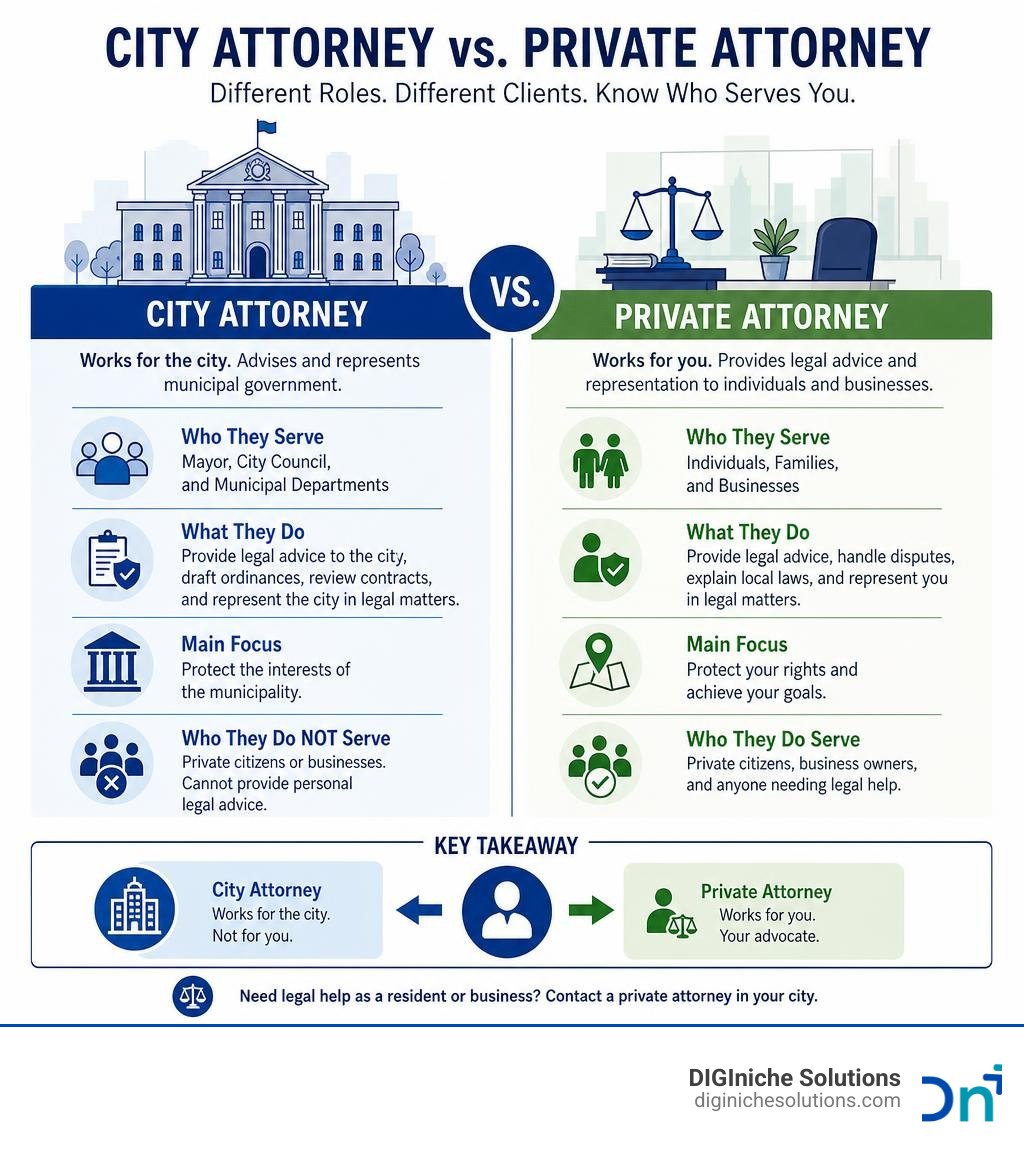
The city attorney works for the city, not for you. Their job is to advise the mayor, city council, and municipal departments — not private citizens or businesses.
This matters more than most people realize. Cities like Port St. Lucie, FL, make it explicit: attorneys employed by the city cannot provide legal advice to residents or business owners. If you need local legal help, you need a private attorney who knows your city’s specific laws, courts, and regulations.
This guide breaks down exactly how city attorneys operate, what they do, and — most importantly — how law firms can position themselves to capture the local legal searches that city attorney offices simply cannot serve.
I’m Frank Demming, and for more than a decade I’ve helped law firms dominate their local markets through targeted SEO, lead generation, and digital strategy built specifically around attorney city specific search behavior. If your firm isn’t showing up when local clients search for legal help in your city, this guide will show you exactly why — and what to do about it.
Attorney city specific basics:
- attorney conversion keywords
- attorney topic clusters
- local attorney seo
Understanding the Role of a City Attorney
To grasp how local legal searches function, we must first look at the official side of municipal law. A city attorney represents the municipal corporation itself. In New Jersey, municipalities are structured as public entities. This means they operate much like a business, with the city council and city manager acting as the board of directors and executive leadership.
The city attorney serves as the chief legal advisor to this corporate body. They do not represent the general public; rather, they represent the legal entity of the city. For example, if you are looking for the Best Municipal Lawyers in New Jersey, you will find private practitioners who specialize in representing clients before municipal bodies, as well as those who are contracted to represent the municipalities themselves.
Defining the City Attorney vs. Private Practice
The distinction between a city attorney and a private practice lawyer is a common point of confusion for citizens. A private practice attorney focuses on representing private citizens, local businesses, or specific interest groups. Their primary loyalty is to their individual client, and their fees are paid directly by that client.
In contrast, a city attorney’s client is the public interest of the municipality as a whole. They are funded by taxpayer dollars and focus entirely on protecting the city from liability, drafting local laws, and advising municipal departments.
For instance, if a local business owner has a zoning dispute, they cannot walk into city hall and ask the city attorney for help. The city attorney represents the zoning board that issued the decision! To protect your business interests, you must hire a private NJ Municipal Attorney, Municipal Law Firm to advocate on your behalf.
Appointment, Qualifications, and Structure of Municipal Legal Teams
The way a city attorney’s office is structured depends heavily on the size of the municipality. In larger cities, the city attorney (often called the Corporation Counsel or City Solicitor) is appointed by the mayor and confirmed by the city council.
Take a look at the Law – City of Jersey City department as an example. Large urban centers require a robust team of in-house, full-time attorneys, paralegals, and administrative assistants to handle the massive volume of civil rights claims, contract disputes, and labor negotiations.
Conversely, smaller New Jersey boroughs and townships rarely have the budget or the need for a full-time, in-house legal department. Instead, they typically contract with a private municipal law firm to provide part-time legal counsel. In these cases, a partner from a local firm is formally appointed as the municipal attorney, attending city council meetings and handling municipal affairs on a contract basis.
Regardless of the structure, municipal attorneys must be licensed to practice law in the state and possess a deep, specialized understanding of local government law. Many are active members of organizations like the New Jersey Institute of Local Government Attorneys (NJILGA), which provides ongoing training on complex municipal regulations.
Key Legal Services Provided to Municipal Governments
The daily operations of a municipal government require constant legal oversight. From small-town disputes to multi-million dollar redevelopment projects, city attorneys keep the wheels of local government turning safely within the bounds of state and federal law.
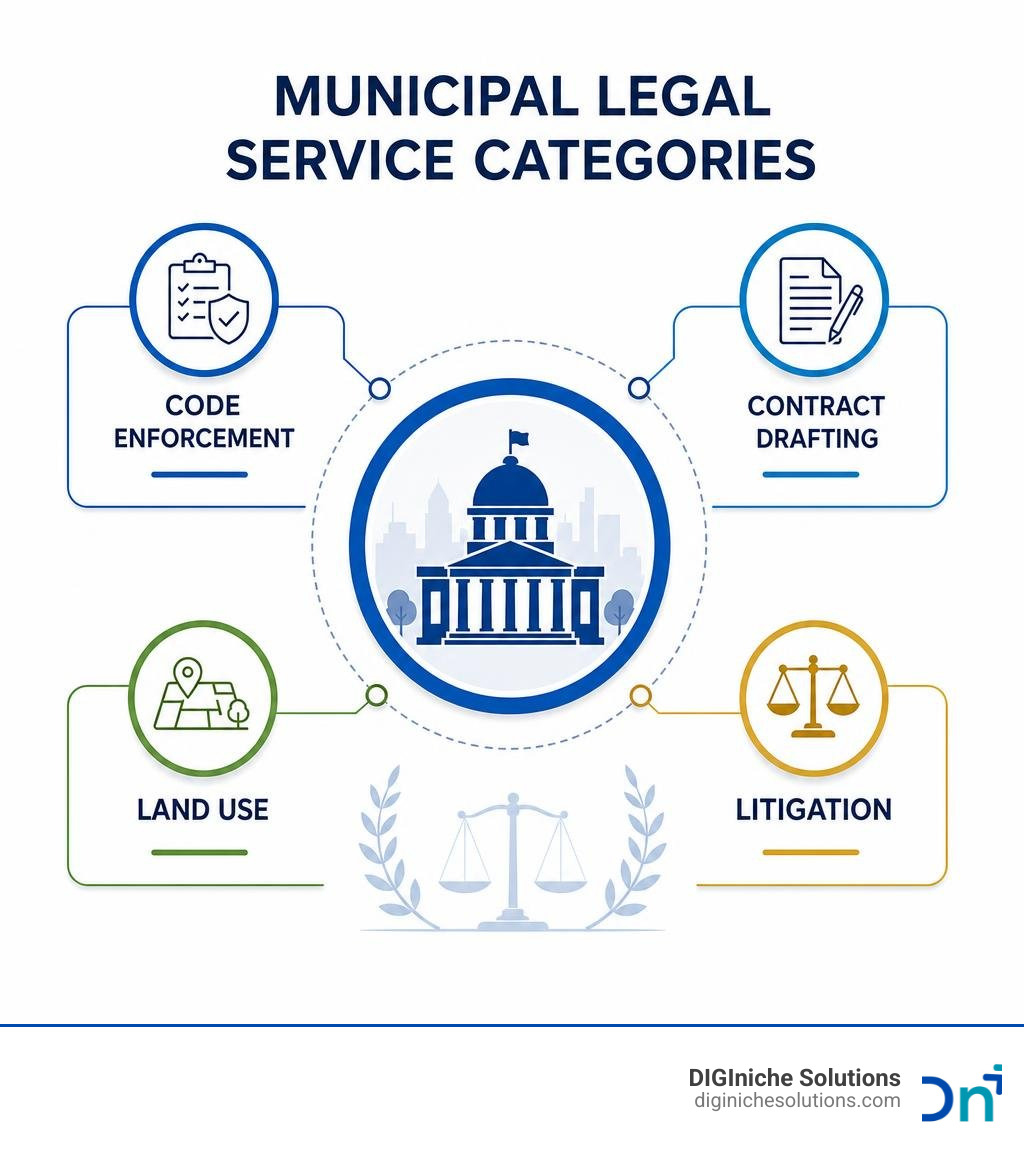
Litigation, Defense, and Prosecution
When someone sues a city—whether it is a slip-and-fall on a public sidewalk or a complex civil rights claim against the local police department—the city attorney’s office manages the civil defense. They work tirelessly to minimize taxpayer exposure and resolve disputes efficiently.
On the flip side, city attorneys also handle prosecution. However, they do not prosecute major felonies (which are handled by the county prosecutor or district attorney). Instead, they prosecute municipal ordinance violations, such as building code infractions, noise complaints, and nuisance abatement actions.
In municipal courts across the country, specialized advocates understand the high stakes of ordinance violations and local criminal defenses. For example, criminal defense attorneys like Meaghan Fiske | Attleboro Criminal Defense & Family Law Attorney routinely defend private citizens facing local charges, demonstrating the natural tension between municipal prosecution and private defense.
Managing Conflicts of Interest and Special Counsel
Because city attorneys represent a public entity with many moving parts, conflicts of interest are common. For example, if the city council and the zoning board have a legal disagreement, the city attorney cannot ethically represent both.
In these situations, the municipality must hire special counsel. This is a private attorney or law firm brought in to handle a specific case or advise a particular board to maintain strict ethical and professional standards.
We see this model used successfully across many jurisdictions. Experienced municipal lawyers, such as Stephanie E. Karr – CHGO Law, show how private practitioners are regularly brought in as special counsel to guide cities through complex transitions, litigation, or independent investigations when the primary city attorney must step aside.
Why You Need an Attorney: City Specific Legal Strategies
If you are a private citizen or business owner, trying to navigate local laws without an attorney city specific expert is like trying to sail a boat without a rudder. Every town has its own unique set of rules, and what is perfectly legal in one town might lead to a hefty fine just across the municipal border.
Navigating Local Regulations with an Attorney: City Specific Expertise
Local ordinances govern everything from where you can place a shed on your property to how late your restaurant can serve food outdoors. A local land use attorney understands these hyper-local nuances.
For example, before signing a commercial lease, a business owner should obtain a zoning verification letter to ensure their target location is approved for their specific business type. Additionally, property buyers must watch out for unrecorded municipal liens (such as unpaid water or sewer charges), which can attach to the property and become the new owner’s financial nightmare.
While attorneys like Land Use & Zoning Attorney, Zach Lombardo handle complex zoning, environmental permits, and land use matters, having a local guide who understands your specific city’s master plan is essential to avoiding costly regulatory delays.
For law firms, capturing these high-intent local searches is the key to growth. Understanding how local geography impacts search behavior is a game-changer, which we discuss in detail in our guide on Why Geo Will Change the Way You Think About SEO for Small Law Firms.
How Private Citizens Find Local Legal Resources
When a resident has a legal issue and realizes the city attorney cannot help them, they need to know where to turn. Fortunately, there are several avenues for finding qualified private counsel:
- Local Bar Associations: Most counties in New Jersey run lawyer referral services that connect citizens with qualified local attorneys.
- Legal Aid Societies: For low-income residents, legal aid organizations offer free or low-cost representation for civil matters like housing disputes and family law.
- Experienced Private Counsel: Seeking out attorneys who have transitioned from public service to private practice is highly effective.
For instance, municipal law veterans like Richard J. Morrisroe | VanDette Law PLLC | New York leverage their deep past experience as city attorneys and housing authority counsel to help private citizens navigate complex local administrative systems and real estate closings.
If you are a law firm looking to connect with these local clients, building a strong online presence is non-negotiable. To learn how to position your firm, check out our comprehensive resource on SEO for Lawyers New Jersey.
Local SEO and Digital Marketing for City-Specific Law Firms
Now, let’s talk about the business side of law. If you run a private practice, how do you make sure that when a local citizen searches for an attorney city specific to their needs, your firm is the first one they see?

This is where local SEO (Search Engine Optimization) comes into play. It is the art and science of positioning your firm at the top of local search results, particularly in the Google Map Pack.
Building High-Ranking Location Pages for Specific Geographies
If your law firm serves multiple towns or counties, you cannot rely on a single, generic homepage to rank for every area. You need dedicated, high-performing location pages (often called “geo pages”).
Instead of launching separate, weak websites for every town—which dilutes your domain authority—we recommend a subfolder strategy on your main website (e.g., yourfirm.com/jersey-city/).
To make these pages rank, they must contain unique, valuable content tailored to that specific community. This includes:
- Clear H1 headers matching local search intent.
- Office-specific contact information with consistent Name, Address, and Phone (NAP) data.
- Local schema markup to help search engine crawlers understand your physical location.
- Embedded Google Maps with driving directions.
- Localized case results, client testimonials, and photos of your local team.
For a deeper dive into optimizing these pages, read our step-by-step guide on Local SEO for Lawyers: Simple Fixes Get More Clients.
Leveraging Local Ads and Reviews for Maximum Visibility
Ranking organically is only half the battle. To dominate your local market, you should also leverage Local Service Ads (LSAs) and manage your client reviews systematically.
LSAs appear at the very top of Google search results, even above traditional pay-per-click ads. They feature a “Google Screened” badge, which builds instant trust with prospective clients. Because you only pay for qualified leads (rather than clicks), they offer an incredibly high return on investment. Learn more about setting these up in our article on Local Service Ads for Law Firms Generate More Leads.
Additionally, treat your online reviews like a primary ranking factor—because Google does. A consistent stream of positive, detailed reviews from local clients signal to Google that your firm is active, trustworthy, and relevant to the local community.
To build a complete marketing plan that integrates these elements, explore Law Firm SEO: The Ultimate Guide.
Frequently Asked Questions about City Attorneys

Can a city attorney provide legal advice to private citizens?
No. The city attorney represents the municipal corporation, its officers, and its departments. Because advising a private citizen on a matter involving the city could create a direct conflict of interest, they are legally and ethically barred from providing private legal counsel.
How do city attorneys handle conflicts of interest?
When a conflict of interest arises—such as when two municipal boards have opposing legal positions—the city attorney must recuse themselves from representing one or both parties. The municipality will then hire independent “special counsel” to provide unbiased legal representation for the duration of the conflict.
What is the difference between a city attorney and a district attorney?
A city attorney handles civil matters, drafts local ordinances, and prosecutes minor municipal code violations for a specific city. A district attorney (or county prosecutor in New Jersey) is a state official who prosecutes state-level criminal offenses and felonies within an entire county or judicial district.
Conclusion
Understanding the distinct boundary between public city attorneys and private practice is essential for both citizens and legal professionals. While the city attorney works hard to protect the municipality, private citizens and businesses need dedicated, local advocates who understand the unique regulatory landscape of their specific town.
At DIGIniche Solutions, we specialize in helping local law firms bridge this gap. Through our proprietary V.E.R.A. Formula (Visibility, Engagement, Retention, and Amplification), we build scalable client-growth ecosystems that position your firm exactly where local clients are searching.
If you are ready to outrank your competitors and capture high-intent local cases, we can help you dominate your geographic market.
Ready to take your firm’s local visibility to the next level? More info about local SEO services is just a click away. Let’s build your growth engine together!
