

Lawyer SEO Pro Tactics That Turn Searches Into Cases
A lawyer SEO pro strategy helps your firm earn more qualified case inquiries by showing up when people search for a specific legal problem in your service area. Start with the work that has the highest impact:
- Target high-intent searches, such as “divorce lawyer in [city]” or “car accident attorney near me.”
- Build one useful, detailed page for each core practice area and location.
- Strengthen local visibility through a complete Google Business Profile, accurate directory listings, and real client reviews.
- Track calls, form submissions, consultations, and signed cases – not rankings alone.
This matters because legal clients move fast. Research cited in the legal SEO industry finds that 72% of people researching an attorney use Google, while 42% also check AI tools such as ChatGPT. Top placement can make a major difference: the first organic Google result receives about 32% of clicks.
For a small or mid-sized firm, the goal is not empty traffic. It is a steady pipeline of people who need your kind of help, are in the right jurisdiction, and are ready to contact an attorney. That requires strong local SEO, trustworthy legal content, sound technical setup, and a website that makes calling or booking a consultation easy.
I am Frank Demming, and for more than a decade I have helped attorneys improve lead generation through SEO, PPC, website optimization, and legal marketing strategy. In this guide, I will break down the lawyer SEO pro methods that can help turn search visibility into better cases.
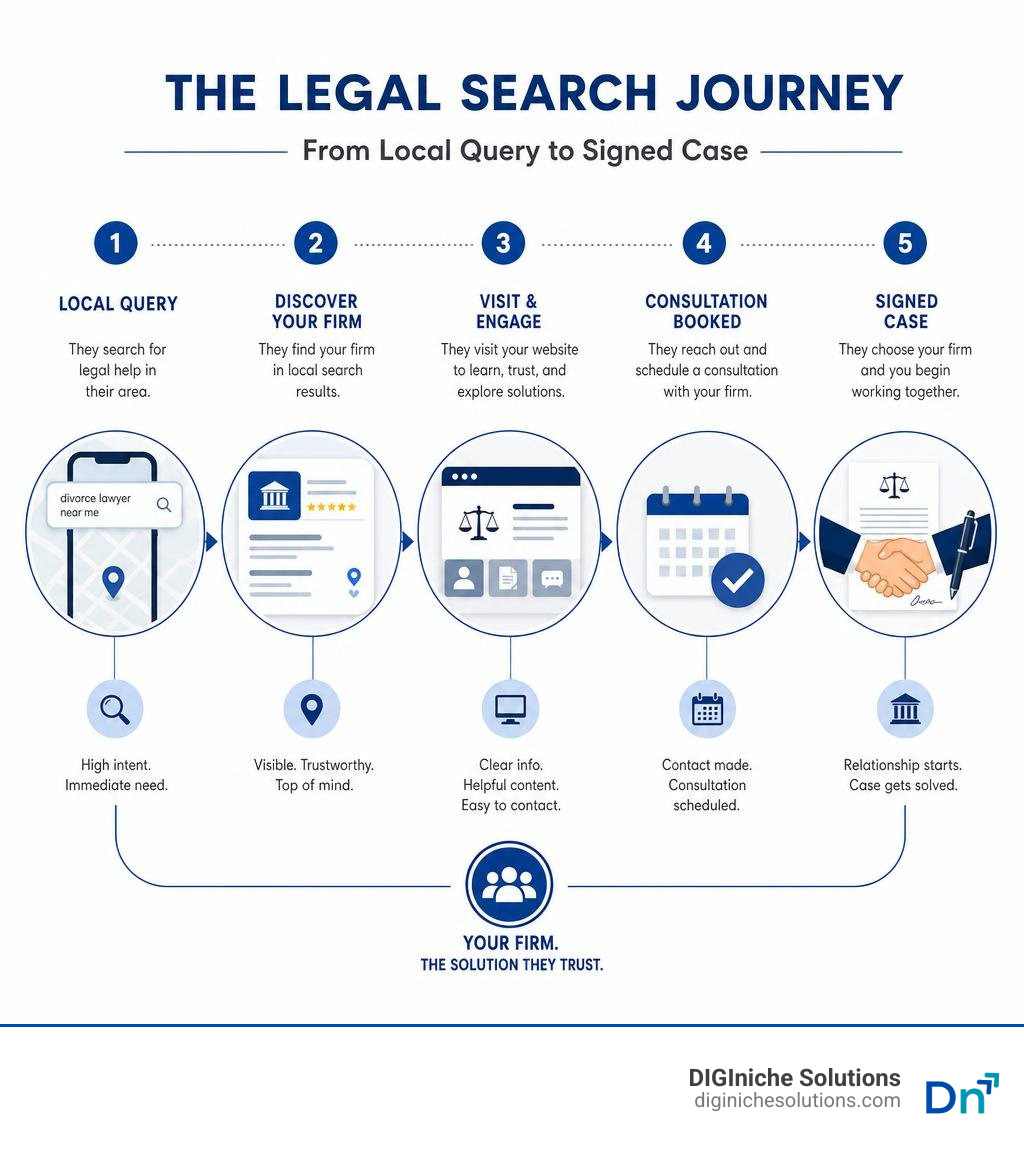
What Defines a Lawyer SEO Pro Strategy in 2026?
A modern search engine optimization campaign for legal practitioners is fundamentally different from general digital marketing. It is not about accumulating massive page views from curiosity seekers across the globe who will never retain your services. Instead, it is an exact, intent-driven acquisition engine engineered to capture prospective clients at their exact moment of legal vulnerability.
Research indicates that 79% of law firms consider SEO their most effective marketing channel. This high confidence exists because organic search captures active demand. When someone types an urgent query into their phone after an auto collision or during a contested custody dispute, they are not casually browsing; they need representation immediately. To understand the foundational mechanics of capturing this intent, review our law firm SEO ultimate guide.
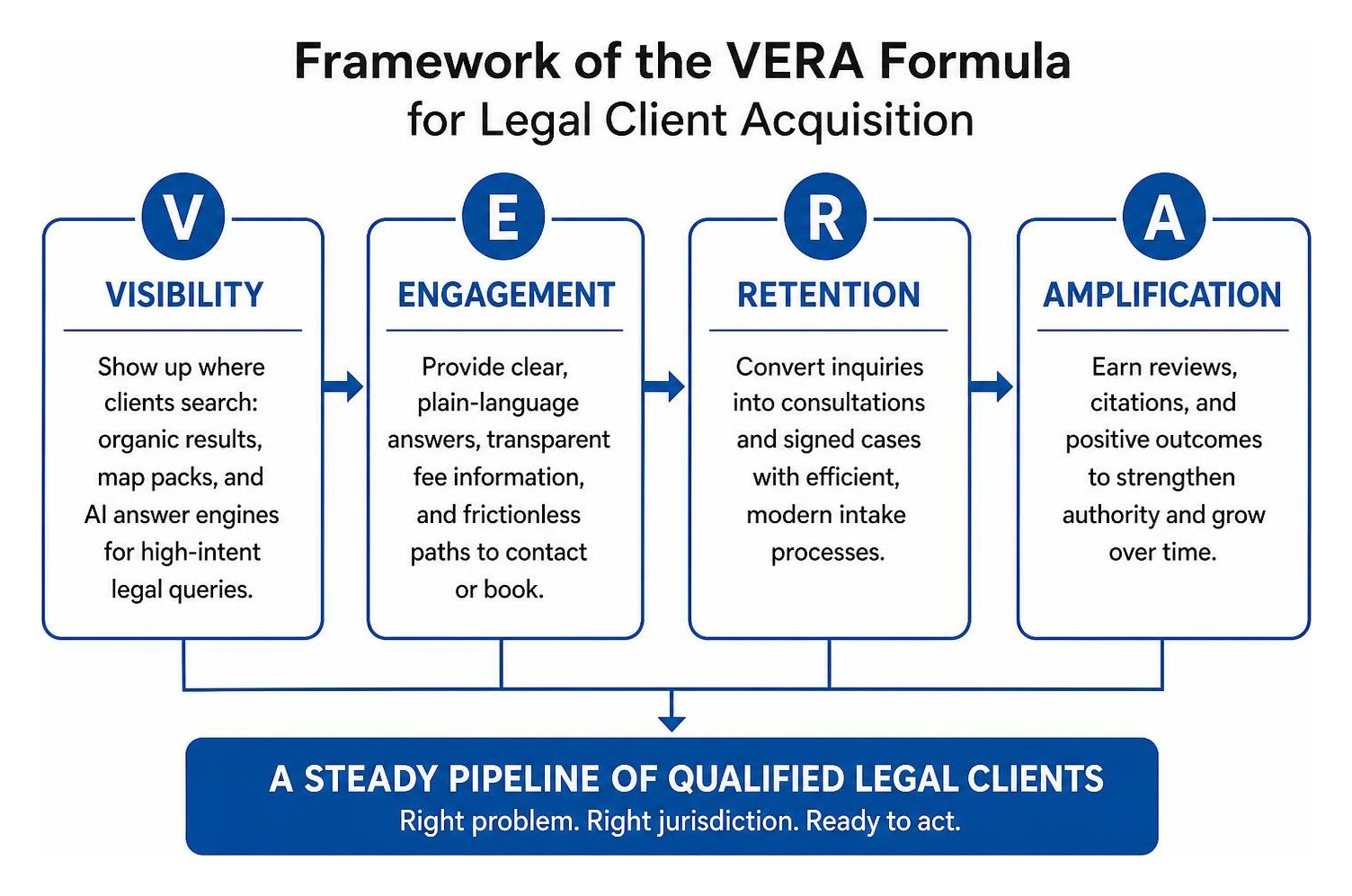
At DIGIniche Solutions, we build legal marketing systems powered by our proprietary V.E.R.A. Formula:
- Visibility: Ensuring your practice dominates organic results, map packs, and AI answer engines for transactional search queries.
- Engagement: Crafting plain-language legal answers, clear fee structures, and frictionless conversion pathways.
- Retention: Modernizing your intake workflows so initial inquiries convert smoothly into signed retainers.
- Amplification: Leveraging positive case outcomes, authoritative citations, and review signals to compound your authority over time.
Essential Services Provided by a Lawyer SEO Pro
Executing an elite legal campaign requires orchestrating several interconnected disciplines rather than relying on a single tactic. The core service pillars include:
- Intent-Based Keyword Mapping: Identifying practice-specific queries with clear commercial intent rather than targeting generic terms that consume crawl equity without delivering signed clients.
- Comprehensive Technical Auditing: Eliminating crawl errors, optimizing site speed metrics, rectifying broken redirects, and streamlining indexation health.
- High-Yield Practice Area Architecture: Creating dedicated, deep-dive landing pages for distinct legal sub-niches.
- Authoritative Legal Link Acquisition: Earning high-trust editorial placements, regional citations, and legal directory authority to build domain credibility.
- Conversion Rate Optimization (CRO): Implementing prominent click-to-call triggers, friction-free intake forms, and mobile-friendly layouts that turn passive readers into consultation requests.
Law firms looking to expand their caseload benefit from deploying full-funnel law firm SEO services to boost legal websites designed specifically around the ethics and economics of law practice.
Local SEO vs. National Authority for Law Practices
Understanding the distinct roles of local and national optimization ensures marketing resources are allocated effectively. For geographic practices—such as personal injury, criminal defense, and family law—local search represents the primary driver of new case value.
| Factor | Local Legal SEO | National Legal SEO / Mass Tort |
|---|---|---|
| Primary Target | Google Local 3-Pack & Localized Organic | Broad organic positions nationwide |
| Search Intent | Immediate regional representation (e.g., city/county modifiers) | Informational research or multi-district litigation |
| Core Ranking Signals | Google Business Profile, local NAP consistency, local reviews | High-authority backlinks, broad topical depth, massive domain authority |
| Geographic Scope | Specific municipalities, counties, and court jurisdictions | Entire national jurisdictions or federal courts |
| Conversion Mechanism | Direct phone calls, tap-to-map directions, quick consultation forms | Long-form intake forms, call centers, multi-step screening |
For attorneys serving localized territories, working with an experienced attorney SEO NJ law firm SEO expert helps secure prominent visibility across targeted municipal regions. Prospective clients evaluating regional advocates frequently turn to trusted directories, such as the Justia directory for Wayne legal practitioners, highlighting the necessity of combining optimized website architecture with consistent external directory positioning.
Building High-Impact Content and E-E-A-T Signals

Search engines hold legal websites to stringent quality evaluations under the “Your Money or Your Life” (YMYL) framework. Content published on an attorney’s domain directly impacts personal liberty, financial security, and familial stability. As a result, search algorithms actively seek clear signals of Experience, Expertise, Authoritativeness, and Trustworthiness (E-E-A-T).
High-impact legal content avoids generic legal jargon and directly addresses the anxieties of potential clients. When someone is served with divorce papers or facing criminal charges, they need immediate, clear answers explaining statutory procedures, potential timelines, and the concrete steps required to protect their rights.
Creating Conversion-Focused Practice Area Pages
A frequent structural error made by law practices is consolidating multiple distinct legal specialties onto a single, broad overview page. Bundling car collisions, slip-and-fall injuries, and medical malpractice together dilutes relevance and prevents targeted search engine ranking.
To establish topical depth, build dedicated standalone pages for each specific legal issue you handle. Structure your content around transactional search intent:
- Direct Problem Identification: State clearly what the legal issue entails within your jurisdiction.
- Clear Next Steps: Outline the immediate actions a client should take (and what mistakes to avoid).
- Local Statutory Context: Reference specific state or local court procedures without making superlative outcome promises.
- Prominent Call-to-Action: Provide clear, accessible options to call your office or submit a secure consultation inquiry.
To identify which structural adjustments yield the fastest case acquisition, examine SEO for law firms what actually moves the needle to align practice pages with genuine user behavior.
Establishing Legal E-E-A-T and Ethics Compliance
All legal marketing is fundamentally attorney advertising and must comply with professional conduct standards, including ABA Model Rules 7.1 through 7.3 and state-specific advertising guidelines. Websites must avoid misleading statements, unsubstantiated comparisons, or promises of specific monetary recoveries.
To build authoritative E-E-A-T while remaining completely compliant:
- Publish Comprehensive Attorney Bios: Detail law school education, formal bar admissions, professional memberships, published legal articles, and court admissions.
- Implement Outbound Credential Verification: Link directly to verifiable professional sources, such as state bar profiles or established legal directories like the Justia directory of Clifton attorneys.
- Incorporate Author Attribution Schema: Use structured markup to declare the qualified attorney author responsible for every published informational guide.
- Transparent Fee and Consultation Policies: Clearly define how contingency fees or hourly retainers operate, managing client expectations before the intake phone call.
Technical Foundations, Schema Markup, and Site Architecture
Even the most thorough legal guide will fail to generate caseload growth if search engine crawlers encounter technical roadblocks. A solid technical baseline ensures that search spiders can crawl, index, and render your practice pages efficiently without consuming unnecessary crawl budget.
A flat website architecture is vital: ensure every critical practice area and location landing page is reachable within one or two clicks from the homepage. Ensure your domain enforces HTTPS encryption, maintains responsive mobile layouts across all viewport sizes, and achieves Core Web Vitals benchmarks (Largest Contentful Paint under 2.5 seconds, Cumulative Layout Shift below 0.1).
Technical SEO Execution by a Lawyer SEO Pro
Structured data markup serves as an explicit translation layer for search engine algorithms. By deploying custom JSON-LD schemas, you provide explicit metadata about your firm’s identity, physical location, licensing jurisdiction, and service offerings.
Essential schema types for law firms include:
LegalService: Identifies your physical firm, geocoordinates, telephone contact, and accepted forms of payment.Attorney: Connects specific licensed individuals to the firm entity, linking external credential profiles and bar license numbers.FAQPage: Marks up common client questions and concise legal answers directly within search results.BreadcrumbList: Establishes clean site hierarchy for search engine crawlers and users alike.
To discover the software platforms and technical auditing suites relied upon by industry specialists, explore how SEO attorney pros share their favorite tools to streamline diagnostic workflows.
Directory Citations and Local Map Pack Domination
The Google Local 3-Pack occupies prime search real estate for high-intent mobile queries like “lawyer near me.” Dominating this local tier requires disciplined citation management and consistent entity signals.
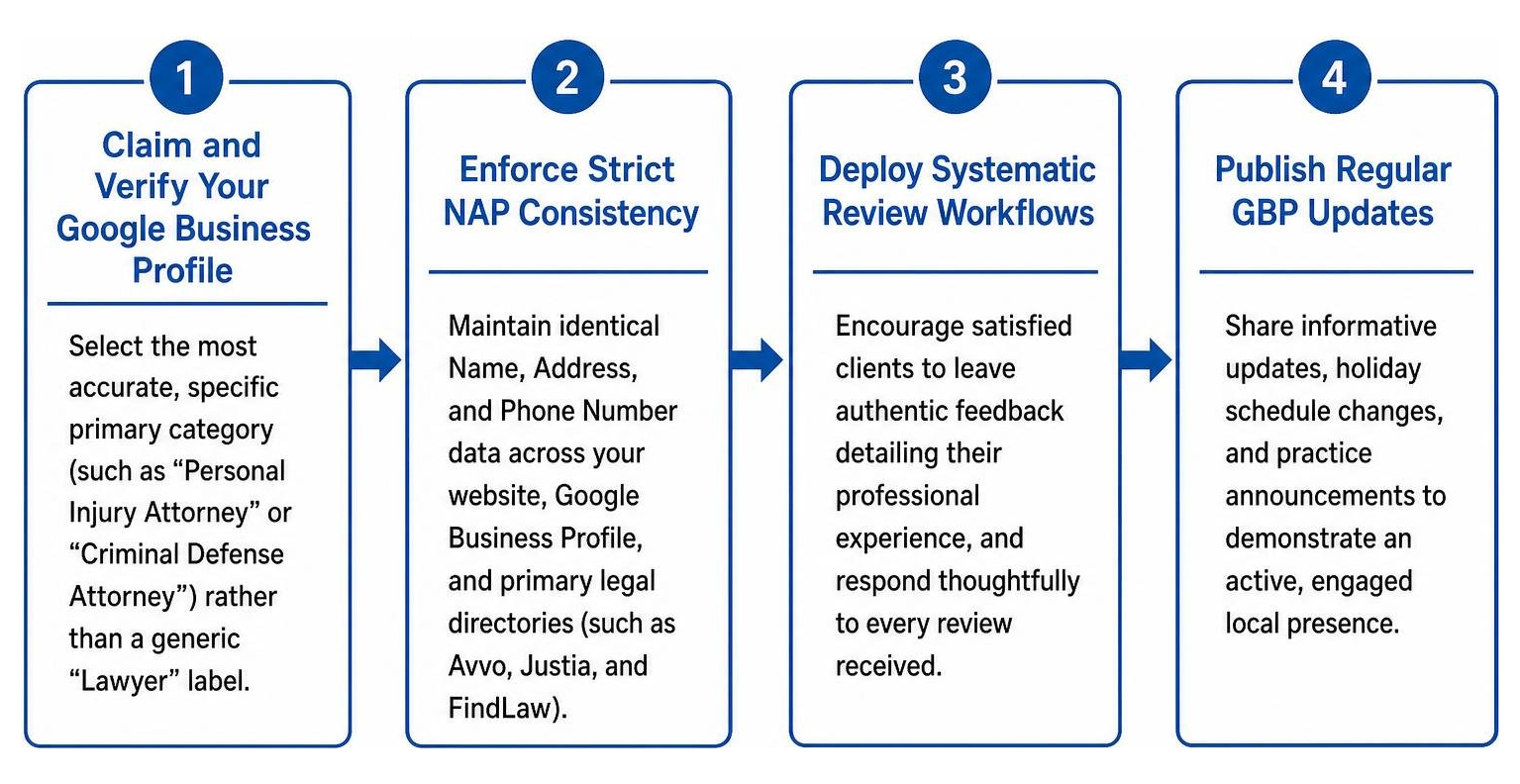
- Claim and Verify Your Google Business Profile: Select the most accurate, specific primary category (such as “Personal Injury Attorney” or “Criminal Defense Attorney”) rather than a generic “Lawyer” label.
- Enforce Strict NAP Consistency: Maintain identical Name, Address, and Phone Number data across your website, Google Business Profile, and primary legal directories (such as Avvo, Justia, and FindLaw).
- Deploy Systematic Review Workflows: Encourage satisfied clients to leave authentic feedback detailing their professional experience, and respond thoughtfully to every review received.
- Publish Regular GBP Updates: Share informative updates, holiday schedule changes, and practice announcements to demonstrate an active, engaged local presence.
For additional actionable techniques to improve your firm’s geographical visibility, study these tips for law firm SEO specialist success.
Dominating AI Search Engines and Generative Engine Optimization (GEO)

The search landscape is undergoing a major evolution. Prospective clients are no longer relying solely on standard search result pages; 42% of legal searchers now cross-reference AI assistants like ChatGPT, Perplexity, and Google AI Overviews during their research process.
Generative Engine Optimization (GEO) is the practice of optimizing your firm’s digital authority so that large language models (LLMs) synthesize and cite your practice as a recommended authority. Research from Princeton, Georgia Tech, and IIT Delhi demonstrates that targeted GEO strategies can enhance visibility in AI-generated responses by up to 40%.
AI systems evaluate law firms by aggregating digital consensus across multiple authoritative platforms:
- Entity Clarity: Ensuring consistent data across structured schema, directory profiles, and state bar registries.
- Third-Party Authority: AI engines query search indexes in real time, drawing citations from high-trust legal publications, news mentions, and verified client sentiment.
- Conversational Content Structuring: Answering complex, multi-layered legal questions clearly, allowing AI models to easily retrieve and quote your explanations.
GEO does not replace foundational organic SEO—it relies entirely upon it. Without robust indexation, verified schema markup, and strong domain authority, an AI engine cannot discover or validate your practice.
Measuring Campaign ROI and Avoiding Common Pitfalls
Law firm search marketing is an investment that must be held accountable to concrete financial metrics. Vanity numbers—such as total search impressions or keyword rankings for obscure, non-commercial terms—do not sustain a law practice. Sustainable growth is measured by qualified consultation inquiries and retained case value.
Key performance indicators (KPIs) to track continuously include:
- Organic Lead Volume: Unique inbound telephone calls, live chats, and intake form completions originating from organic search.
- Cost Per Qualified Acquisition (CPA): The total marketing investment divided by the number of signed retainers generated.
- Case Value Attribution: Connecting signed matters directly back to the initial landing page or search query that brought the client to your website.
Real-World Performance Metrics and Realistic Timelines
Legal SEO is a compounding growth strategy, not an overnight switch. In moderately competitive practice areas, initial ranking movements and long-tail query traction typically emerge within months 3 to 6. Significant Map Pack traction, core keyword maturity, and consistent monthly case flow typically mature between months 6 and 12.
To see documented examples of how deliberate search architecture transforms practice revenue, review our attorney SEO case studies detailing sustainable client growth.
Common Legal SEO Mistakes to Avoid
Many law practices struggle to achieve meaningful search traction due to predictable, avoidable missteps:
- Targeting Broad, Non-Converting Keywords: Chasing high-volume terms like “lawyer” instead of localized, problem-specific terms like “contested divorce lawyer in Passaic County.”
- Keyword Stuffing: Artificially repeating geographic names and practice phrases throughout body copy, which degrades readability and triggers algorithmic penalties.
- Publishing Thin or Duplicated Location Pages: Creating dozens of municipal landing pages with identical text where only the city name has been swapped out.
- Neglecting Website Conversion Architecture: Driving search visitors to pages lacking clear telephone numbers, attorney credentials, or mobile-friendly contact forms.
- Overlooking Negative Reviews: Failing to monitor and professionally respond to client feedback across Google and legal directories.
Frequently Asked Questions About Law Firm SEO
How long does it take for law firm SEO to generate qualified leads?
Most law practices begin observing early ranking movements and long-tail organic impressions within 3 to 6 months. Achieving competitive dominance for high-value commercial terms in competitive metropolitan areas generally requires 6 to 12 months of consistent technical refinement, content production, and backlink acquisition. As domain authority strengthens, lead generation compounds, lowering your overall cost-per-case over time.
What is Generative Engine Optimization (GEO) for attorneys?
Generative Engine Optimization (GEO) involves optimizing your firm’s online entity data, structured schema, and legal content so AI answer engines (including ChatGPT, Perplexity, and Google AI Overviews) recognize your practice as an authority and cite your firm directly in response to conversational legal inquiries.
Why should law firms avoid guaranteed SEO rankings?
Reputable search marketing professionals never guarantee specific numeric rankings because search algorithms evaluate hundreds of dynamic, third-party variables that no single agency controls. Unrealistic ranking guarantees often rely on high-risk, black-hat tactics that can result in algorithmic penalties or manual actions against your law firm’s domain. Legitimate legal SEO focuses on transparent execution, ethical compliance, and verifiable lead generation.
Conclusion
Dominating search results in 2026 requires an integrated strategy that connects high-intent keyword mapping, bar-compliant E-E-A-T content, flawless technical schema, and forward-looking Generative Engine Optimization. When these components work together, your website shifts from a static digital brochure into an active client acquisition engine.
At DIGIniche Solutions, we specialize in helping legal practices scale sustainably using our proven V.E.R.A. Formula. If you are ready to expand your caseload and establish lasting authority in your market, connect with us for specialized New Jersey SEO for lawyers and build a predictable pipeline of qualified clients.
