

SEO for Lawyers in NYC: Start With the Searches That Bring Cases
To win more qualified cases from search, build a strong page for each practice area, then target the boroughs you actually serve. Keep your Google Business Profile accurate, earn relevant local links and reviews, and make it easy to call or request a consultation. Track signed cases, not just rankings.
A firm in Queens may need a different search strategy from one in Manhattan. The goal is not to make hundreds of near-identical location pages. It is to give potential clients a clear reason to trust your firm when they search. When executing SEO for lawyers, NYC practices need a clear strategy built around local relevance, authority, and measurable client acquisition.
I’m Frank Demming, and I’ve spent more than a decade helping law firms with SEO, PPC, website improvements, and lead generation. This guide is my practical take on SEO for lawyers in NYC, with the focus where it belongs: better cases.
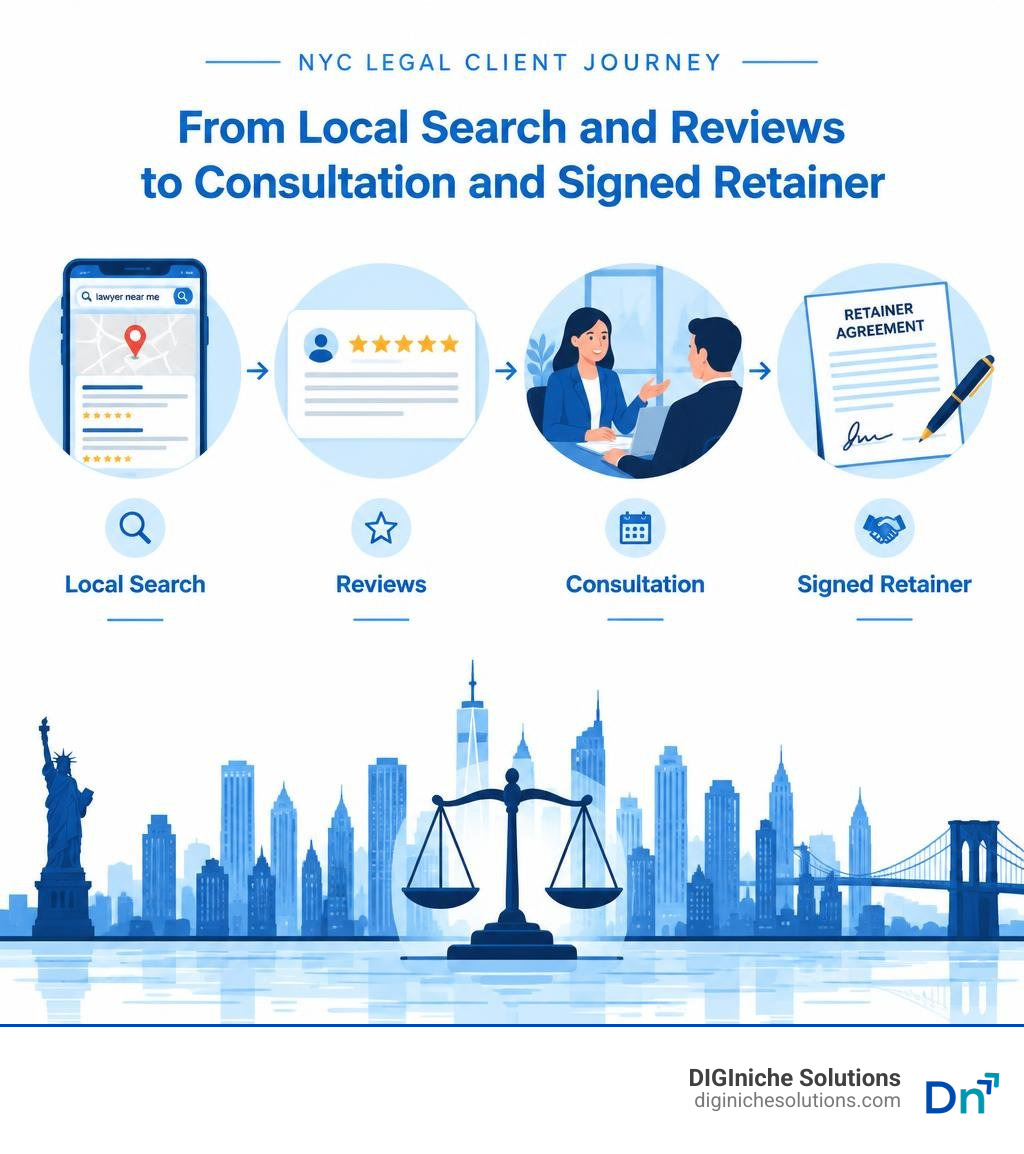
Key resources for growing your practice:
The Anatomy of the NYC Legal Search Market
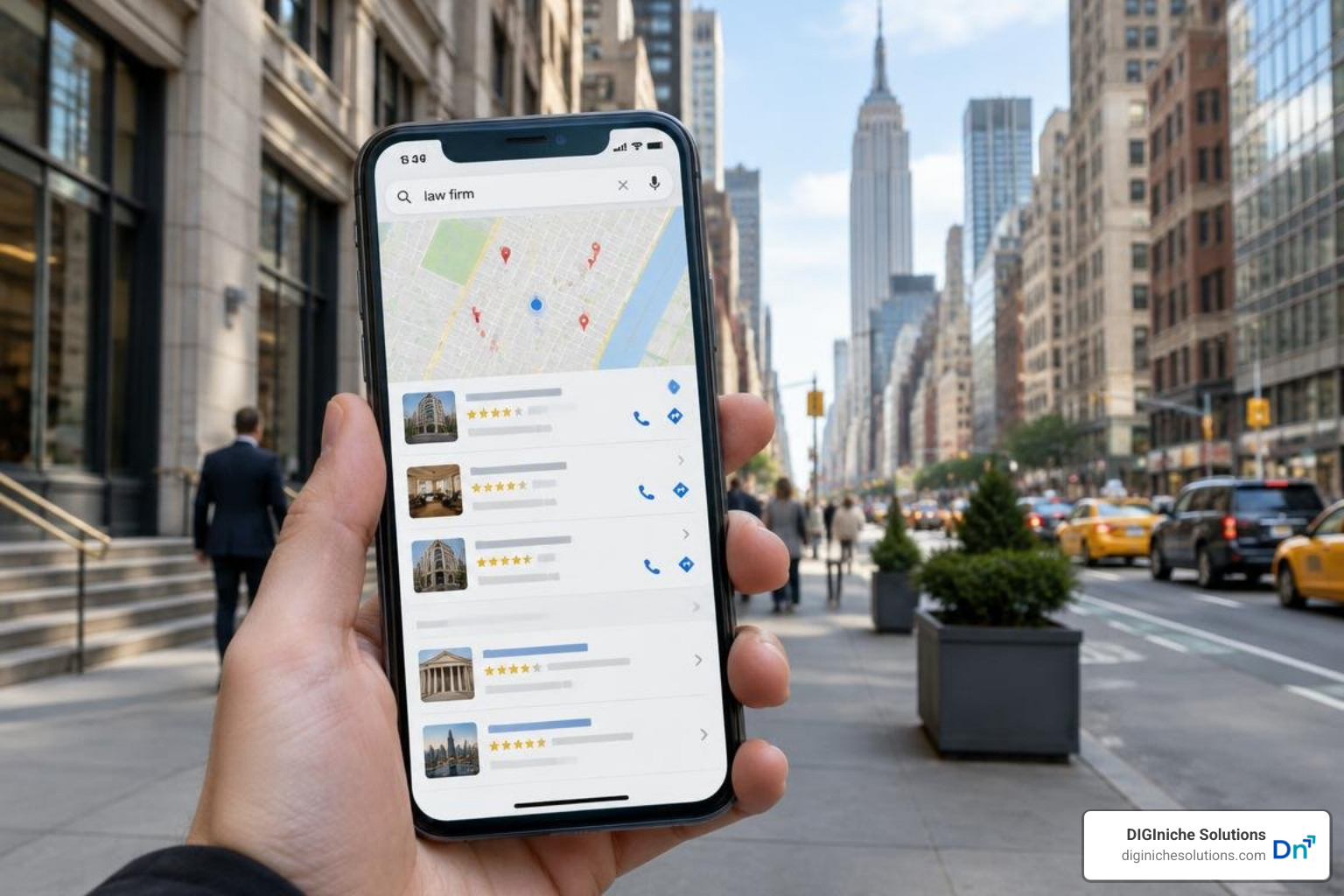
New York City represents one of the most intense legal battlegrounds in the world. With over 187,000 licensed attorneys practicing across five dynamic boroughs, capturing client attention requires a deep understanding of local search behaviors. Potential clients do not browse casually; their search intent generally falls into three distinct categories:
- Urgent-Need Searchers: Individuals arrested in Midtown, injured in a Queens rideshare collision, or served with emergency court orders. They search on mobile devices and call one of the top three Google Maps pack results immediately.
- Research-Heavy Clients: Corporate executives, real estate developers, or spouses planning a complex divorce. These users spend weeks evaluating case results, published articles, and attorney bios across organic listings.
- Referral Validators: Prospects who were referred by a colleague but immediately search your firm’s name on Google to check reviews, recent press, and professional authority before making contact.
To capture these high-value retainers, modern practices turn to outranking top legal competitors through search engine marketing rather than burning budgets on temporary ad placements.
High-Stakes Economics: Organic Rankings vs. Skyrocketing CPCs
Relying entirely on Google Ads in the New York metropolitan area has become financially draining. In ultra-competitive categories like personal injury, paid search cost-per-click (CPC) rates regularly fluctuate between $200 and $400. Specialized commercial litigation and catastrophic injury terms can easily reach $500 or more per click. A single accidental click from an unqualified browser depletes substantial marketing capital.
| Metric / Channel | Google Ads (PPC Alone) | Organic & Local Legal SEO |
|---|---|---|
| Average Cost Per Click (NYC) | $150 – $400+ | $0 per click after ranking |
| Sustainability | Stops immediately when budget runs dry | Compounding digital equity over years |
| Trust Factor | Lower user trust; perceived as paid ad | High trust; 70%+ of clicks go to organic/Maps |
| Scalability | Linear cost scaling per lead | Decreasing cost-per-acquisition over time |
Organic search engine optimization transforms your firm’s digital presence into a long-term asset that generates consistent inquiries month after month without paying toll fees on every interaction.
Multi-Jurisdictional and Demographic Diversity Across Five Boroughs
New York City’s legal ecosystem is not a monolith. Each borough functions as its own distinct legal and cultural marketplace:
- Manhattan: Heavily concentrated with high-stakes commercial litigation, corporate transactions, securities law, and boutique white-collar defense.
- Brooklyn: A high-volume market for personal injury, civil rights, tenancy disputes, and boutique business advisory.
- Queens: The most ethnically diverse county in America, driven by massive demand for immigration, family law, and small-business legal guidance.
- The Bronx: Characterized by high search volumes for criminal defense, labor law violations, and premises liability.
- Staten Island: Driven by local community networks seeking estate planning, probate, divorce, and motor vehicle accident representation.
Firms targeting the entire city with a single generic homepage fail because search engines demand geographic relevance and jurisdictional accuracy.
Mastering SEO for Lawyers NYC: The Five-Borough Strategic Framework

Dominating search engines across the city requires technical precision, clean site architecture, and speed. Following our proven roadmap for dominating law firm Google rankings ensures your site meets Core Web Vitals requirements (Largest Contentful Paint under 2.5 seconds and minimal layout shifts) while catering to mobile-first indexing.
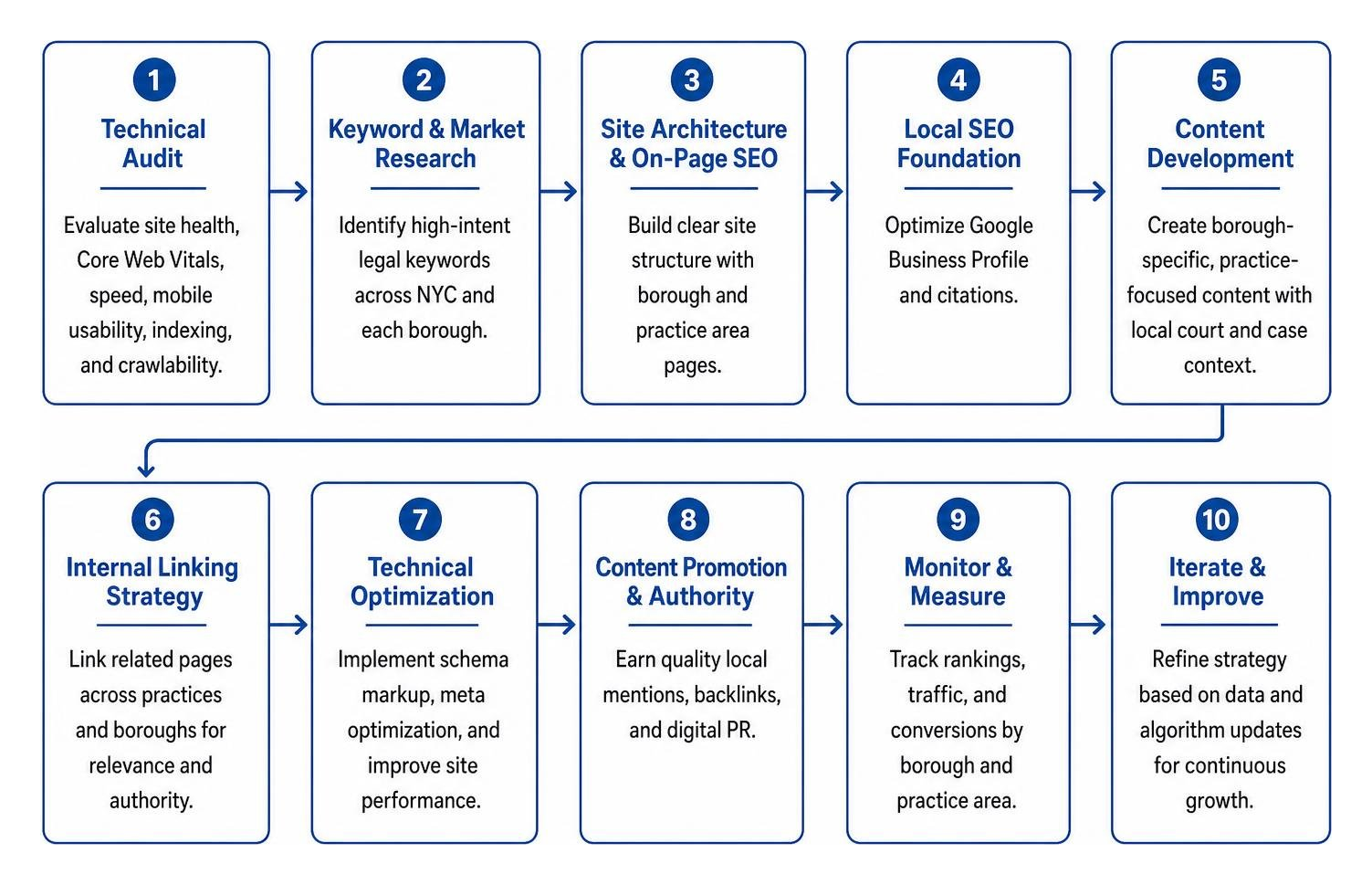
Why SEO for Lawyers NYC Demands Borough-Specific Landing Pages
Google algorithms prioritize proximity and local relevance. If an injured construction worker searches for an attorney from Astoria or an entrepreneur looks for contract drafting in Williamsburg, Google serves firms with authentic local signals.
To succeed at winning the local legal search game in competitive markets, your site structure must feature dedicated practice-area pages tailored to specific boroughs. Rather than creating generic doorway pages, each borough page must provide distinct legal value, reference relevant local courts (such as Kings County Supreme Court or Queens County Civil Court), and discuss local case contexts.
Multilingual Search Optimization for Global NYC Demographics
With hundreds of languages spoken across the city, multilingual optimization represents an immense, underutilized growth channel. High-intent legal searches occur daily in Spanish, Mandarin, Russian, Bengali, and Haitian Creole.
By creating accurately translated, culturally fluent legal guides, law firms capture underserved prospective clients searching in their native languages. Adhering to international standards outlined by resources like SEO Global Home allows multi-language legal sites to maintain proper hreflang tags, preventing duplicate content issues while ensuring the right language displays to the right searcher.
Local Authority: Google Business Profile, Citations, and Reviews
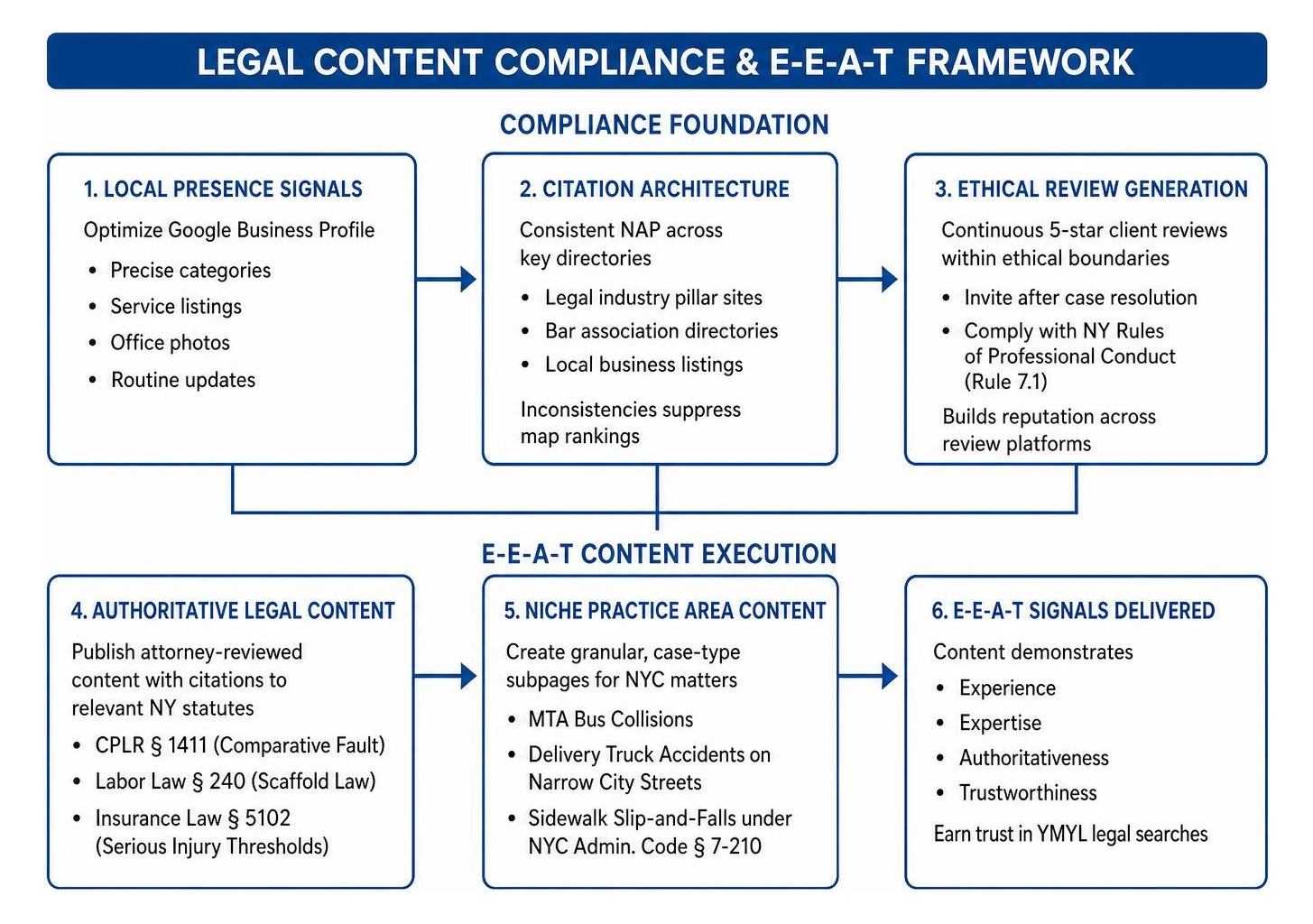
The Google Local 3-Pack captures more than 40% of all high-intent clicks for legal searches. Securing prime placement requires an active, fully optimized Google Business Profile (GBP). As detailed in our in-depth guide to local SEO for lawyers, your GBP listing must feature precise primary categories, accurate service listings, high-resolution office photography, and routine updates highlighting firm achievements.
Citation Architecture and NY Legal Directories
Search engines validate your firm’s real-world existence and physical office location through business citations. Your Name, Address, and Phone Number (NAP) must be identical across every public registry. Key platforms include:
- Legal industry pillars: Avvo, Justia, FindLaw, Martindale-Hubbell, and Super Lawyers
- Bar directories: New York State Bar Association (NYSBA) and the New York City Bar Association
- Local business listings: Better Business Bureau, Chamber of Commerce directories, and localized business indexes
Inconsistent street abbreviations or outdated phone numbers degrade Google’s trust and suppress local map rankings.
Ethical Review Generation and Reputation Velocity
A continuous stream of 5-star client reviews directly influences map pack positions and drives click-through rates. However, attorneys must navigate strict regulatory boundaries. Under New York Rules of Professional Conduct (Rule 7.1), legal advertising cannot make misleading claims or guarantee specific case outcomes.
We recommend deploying automated review request systems that invite satisfied clients to share their honest experiences immediately following case resolution. Practicing ethical legal SEO client acquisition protects your professional standing while steadily building authority across Google, Avvo, and legal review networks.
High-Value Practice Area Content and Authority Link Building
Google places legal content under its strictest classification: Your Money or Your Life (YMYL). Content that influences a reader’s legal rights or financial wellbeing must exhibit deep Experience, Expertise, Authoritativeness, and Trustworthiness (E-E-A-T).
Understanding what moves the needle in law firm SEO means publishing comprehensive, attorney-reviewed legal analyses that reference relevant state statutes, such as:
- New York Civil Practice Law and Rules (CPLR § 1411) regarding comparative fault
- New York Labor Law § 240 (the “Scaffold Law”) for construction site injuries
- New York Insurance Law § 5102 defining serious injury thresholds in no-fault auto claims
Niche Content Strategy for Top NYC Practice Areas
Avoid broad overviews that provide little actionable legal information. Break down your primary practice areas into granular, case-type subpages:
- Instead of just “Personal Injury,” build specific guides for MTA Bus Collisions, Delivery Truck Accidents on Narrow City Streets, and Sidewalk Slip-and-Falls under NYC Administrative Code § 7-210.
- Instead of just “Real Estate Law,” create dedicated content covering Commercial Lease Negotiation in Midtown, Co-op Board Approval Disputes, and NYC Zoning Regulations.
Structuring content with clear headings, bulleted takeaways, and FAQ schema also positions your firm to appear directly inside AI-driven answer engines such as ChatGPT, Perplexity, and Google AI Overviews.
Earning High-Authority NYC Backlinks and Digital PR
Backlinks serve as votes of institutional confidence. In a competitive market, low-quality directory links are insufficient. Law firms must earn authoritative local links through:
- Legal Journalism and Commentary: Providing expert quotes on evolving New York legislative bills to local media outlets.
- Law School Contributions and Publications: Writing guest articles or analysis for academic law reviews and regional bar journals.
- Community Engagement: Sponsoring local neighborhood initiatives, legal aid clinics, and community civic events.
These locally relevant, high-domain-authority links reinforce your website’s prominence in the eyes of search algorithms.
Performance Tracking and Avoiding Costly Legal SEO Pitfalls
Legal search campaigns can stumble if technical health and strategic focus are neglected. Common pitfalls include keyword cannibalization (multiple pages competing for the same search term), thin attorney biographies that lack bar admission details, and disconnected location pages that offer no unique local value.
Ensuring your agency is accountable requires tracking law firm SEO performance accurately using transparent, lead-focused metrics.
Measuring ROI and Conversion Tracking in SEO for Lawyers NYC
Vanity metrics like impressions and total traffic do not pay office rent. A robust analytics infrastructure must track the entire conversion path:
- Dynamic call tracking numbers that trace phone calls directly to specific organic search terms
- Web form analytics measuring completed consultation requests
- Google Analytics 4 (GA4) conversion events tied directly to CRM pipeline stages
- Clear calculation of Client Acquisition Cost (CAC) compared against signed case value
Cross-State Expansion: Bridging New York and New Jersey Search Markets
Many New York practices serve clients who live in Northern New Jersey and commute into Manhattan daily. Expanding your digital footprint across state lines requires clear jurisdictional signals.
If your attorneys are dual-licensed, exploring our dedicated playbook on SEO for lawyers in New Jersey will help your practice capture commuter cases without creating jurisdictional confusion on your website.
Frequently Asked Questions About NYC Legal SEO
How long does it take for an NYC law firm to achieve page-one Google rankings?
Firms optimizing their Google Business Profile and local citations often see initial movement in local map packs within 60 to 90 days. Ranking on page one for highly contested organic terms (such as “car accident lawyer NYC”) typically requires 6 to 12 months of consistent technical refinement, content production, and authority link acquisition.
How much does professional legal SEO cost in New York City?
Comprehensive, full-service legal SEO retainers in New York typically range from $3,500 to $10,000+ per month, depending on practice area competition, current domain authority, and target geographic coverage. Given that a single high-value commercial or personal injury retainer can yield substantial revenue, the return on investment consistently outperforms paid advertising.
Can solo attorneys and boutique firms outrank large NYC law firms?
Yes. Solo practitioners routinely outrank large national firms on Google Maps and localized organic search. By dominating hyper-local neighborhood terms (e.g., “probate attorney Bay Ridge” or “commercial lease lawyer Tribeca”), gathering client reviews, and maintaining fast, modern websites, boutique practices can capture high-converting search traffic.
Conclusion
Building a dominant search presence in New York City requires strategic planning, technical rigor, and consistent execution. When your law firm establishes deep local relevance, provides thorough legal answers, and earns genuine local authority, organic search transforms into your most profitable client acquisition channel.
At DIGIniche Solutions, we help law firms scale sustainably through our proprietary V.E.R.A. Formula (Visibility, Engagement, Retention, and Amplification). If you are ready to build a reliable pipeline of qualified city clients, schedule a strategic consultation with our team today.
