

Are Legal Lead Generation Companies Worth It? Here’s What You Need to Know First
Legal lead generation companies can be a fast way for law firms to fill their client pipeline — but not all of them deliver what they promise.
Here are the top legal lead generation companies and what makes each one stand out:
| Company | Model | Lead Type | Best For |
|---|---|---|---|
| 4LegalLeads | Pay-per-lead | Exclusive, real-time | General practice, 40+ categories |
| Nolo | Directory + pay-per-lead | Shared or exclusive | Content-driven consumer leads |
| FindLaw | Directory + PPC | Shared | Broad visibility, multiple areas |
| Avvo | Directory + premium listing | Shared | Profile-based credibility |
| LegalMatch | Marketplace membership | Matched leads | Firms wanting pre-screened cases |
| Unbundled Attorney | Pay-per-lead | Exclusive | Flat-fee and limited scope services |
| Lawyers.com | Directory + lead gen | Shared or exclusive | High-volume general practice |
| Lawdience | Pay-per-signed-retainer | Exclusive | Class action plaintiff firms |
Here’s the problem most attorneys run into: they sign up for a lead service, spend hundreds or thousands of dollars, and end up with a pile of disconnected phone numbers and no new clients.
It’s frustrating. And it’s very common.
With 77% of people searching for an attorney starting their research online, the opportunity is real. Avvo alone generates over 650,000 contacts between prospective clients and attorneys every single month. The Nolo network fields more than 100,000 requests to speak with an attorney per month. The volume is there.
But volume without quality is just noise.
The difference between a lead service that grows your firm and one that drains your budget comes down to a handful of details — exclusivity, delivery speed, lead verification, and whether the provider actually specializes in legal or just treats it as one of fifty industries they serve.
This guide breaks all of that down so you can make a clear-eyed decision.
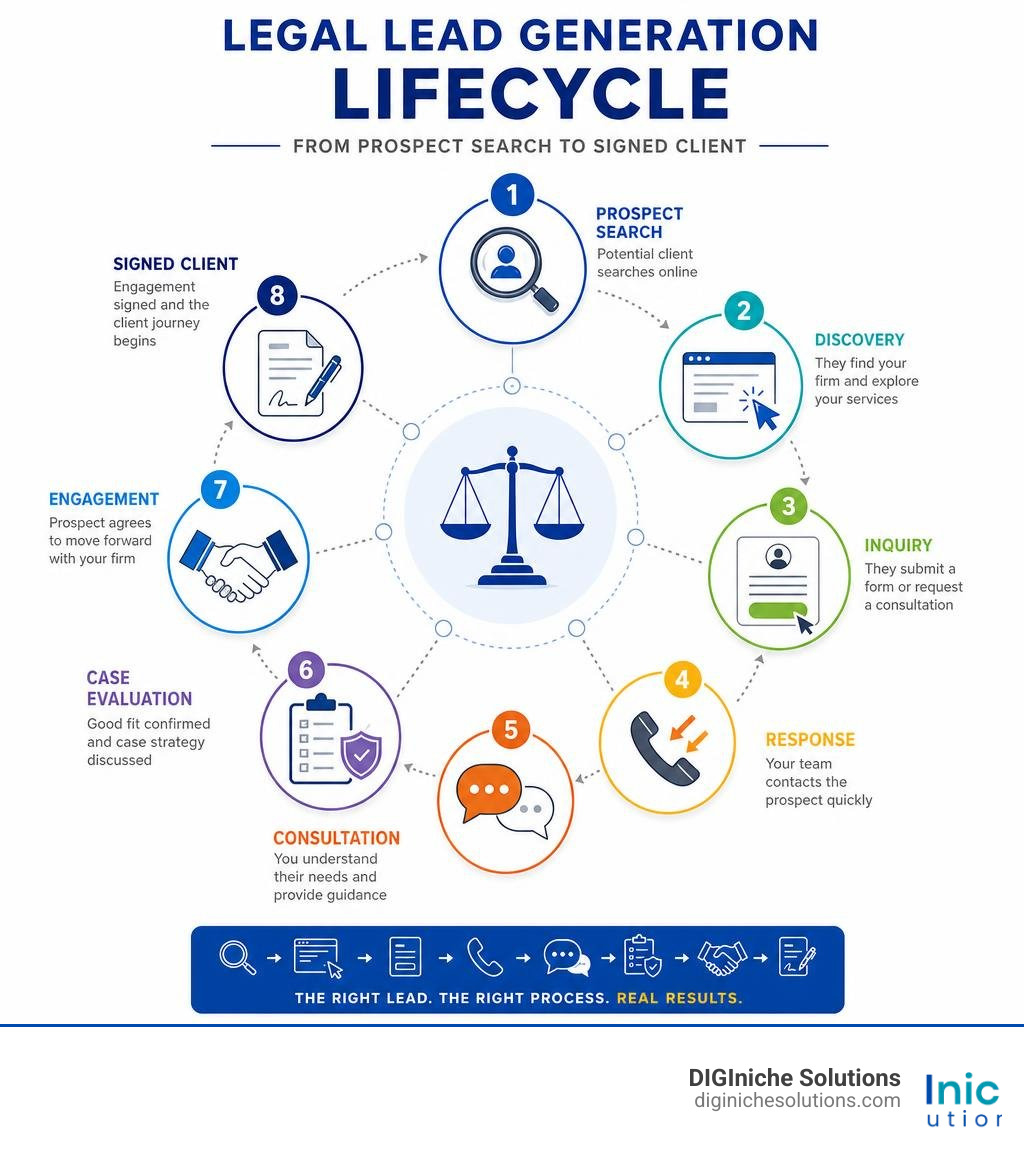
Understanding Legal Leads and How They Drive Law Firm Growth
To build a thriving practice in New Jersey or anywhere nationwide in 2026, relying solely on old-school word-of-mouth is no longer a viable long-term strategy. That is where legal leads come in.
A legal lead is a prospective client who has actively taken action to find legal assistance. They might have filled out a web form after reading an article about car crash injuries, answered a questionnaire about bankruptcy eligibility, or called a phone number displayed on a legal directory. Unlike passive marketing, where you show an ad to someone who might need you eventually, legal leads represent high digital intent.
When you purchase or generate these leads, you are bypassing the long process of building initial awareness and jumping straight to prospect qualification. However, not all leads are at the same stage of the decision-making process. Some are just looking for free information, while others are holding a pen, ready to sign a retainer.
Effectively converting these prospects requires a structured intake process. If you want to dive deeper into how to structure your intake and follow-up sequences to maximize these opportunities, check out our Attorney Lead Generation Tips Must Follow to Win Clients.
Evaluating the Best Legal Lead Generation Companies
The landscape of legal lead generation companies is filled with different business models. Choosing the right partner requires understanding how they operate behind the scenes.

Here is a breakdown of the three primary models you will encounter:
- Directory Listings: Platforms like Avvo (boasting over 8 million monthly visitors) and Lawyers.com (with over 1 million profiles) operate as massive digital phone books. They rank highly on search engines for localized legal terms. Attorneys pay for premium profiles, badges, or sponsored positioning to capture the traffic passing through. To see which directories are worth your time, read our guide on the Best Legal Directories to Get Listed.
- Pay-Per-Lead (PPL): Providers like 4LegalLeads (operating since 2001 with over 40 categories) and Unbundled Attorney charge you a flat fee for every individual lead delivered. They handle the search ads, landing pages, and initial screening, passing the contact details directly to you.
- Marketplace Matching: Services like LegalMatch use a matchmaking model. Prospective clients submit their cases anonymously, and matching member attorneys in the network are notified. The attorney then reviews the case details and decides whether to pitch their services.
Core Practice Areas Served by Legal Lead Generation Companies
Different lead generation models work better for different practice areas. For instance, high-volume consumer practices like bankruptcy, family law, and DUI defense rely heavily on , high-intent web leads or live transfers.
In personal injury and mass torts, the stakes are much higher. A single motor vehicle accident (MVA) case can be worth tens of thousands of dollars, making competition fierce. Because of this, personal injury leads are typically the most expensive and heavily screened. To understand why establishing a dominant, high-quality presence in this niche matters so much, explore Why Personal Injury SEO is Worth It.
How to Compare and Choose Legal Lead Generation Companies
When comparing legal lead generation companies, do not let a sales representative dazzle you with raw volume numbers. Ask the hard questions:
- Track Record: How long have they been in business? A company that has survived for decades, like 4LegalLeads, has refined its quality filters over time.
- Geographic Targeting: Can you target down to the county or zip code level? If you are a family law attorney in New Jersey, you do not want to pay for leads on the other side of the state line.
- Contract Flexibility: Avoid long-term contracts. Reputable companies often offer pay-as-you-go funding systems with no monthly minimums. If a provider forces you into an annual contract, it is often a sign they struggle with client retention.
- Lead Volume Predictability: Can they guarantee a steady stream of leads, or will your pipeline run dry during peak seasons?
For a broader look at how to balance these third-party services with other client acquisition methods, see our guide on Getting Clients for Law Firm Online Offline Marketing Tactics.
Exclusive vs. Shared Leads: Why Exclusivity, Speed, and Quality Matter
In the legal lead industry, you will constantly hear the terms “exclusive” and “shared.” Understanding the difference is critical to your return on investment.
A shared lead is sold to multiple law firms simultaneously (often three to five). When a lead is shared, client acquisition becomes a brutal race to the phone. The firm that dials first and gets the prospect on the line usually wins. If you do not have a dedicated, 24/7 intake team, buying shared leads is an easy way to burn your budget.
An exclusive lead is sold to your firm and only your firm. This gives you the breathing room to build a relationship, conduct a thorough intake, and demonstrate value without the immediate pressure of competing callers. While exclusive leads cost more upfront, their conversion rates are significantly higher.
If you are looking for highly verified, exclusive motor vehicle accident leads, you can explore specialized external options like Pay-Per-Lead MVA Leads for Attorneys | Exclusive • Verified • High Intent .
Web Leads vs. Live Call Transfers
The delivery mechanism of your leads heavily impacts your conversion rates.
- Web Leads: These occur when a user fills out a contact form on a landing page. The data is packaged and sent to you via email, SMS, or directly into your CRM. Web leads are excellent for building a steady pipeline, but they require immediate follow-up.
- Live Call Transfers: This is the gold standard of lead generation. A prospect calls a tracking number, is screened by a live operator (or an automated system) to verify they meet your criteria, and is immediately transferred to your office phone. The consumer intent is at its peak because they are actively looking to speak with an attorney right now.
Lead Quality Verification, Pricing, and Return Policies
How do reputable lead providers ensure you are not paying for disconnected numbers or spam? They implement multi-step quality control systems. This includes verifying phone numbers via one-time passwords (OTP), utilizing TCPA-compliant consent forms, and filtering out bad keywords.
Pricing varies wildly based on practice area, geographic competition, and lead type:
| Lead Type | Average Cost per Lead (CPL) | Exclusivity | Return Policy |
|---|---|---|---|
| Bankruptcy / Family Law | $20 – $100 | Shared or Exclusive | Usually credit for wrong numbers |
| Personal Injury (MVA) | $75 – $350 | Exclusive | Replacement for invalid details |
| Class Action / Mass Tort | Billed on Signed Retainer / Flat Fee | Exclusive | Success-based (no retainer, no fee) |
Always read the fine print regarding return policies. Reputable companies will offer a clear, painless process to replace “bad leads” (such as fake names, out-of-state cases, or wrong numbers) within a specified window.
CRM Integration and Intake Automation
A lead is only as good as your ability to handle it. If you are manually copying and pasting contact details from emails into sticky notes, you are losing money.
Top lead generation companies offer direct API integrations with legal practice management and CRM systems like MyCase, Clio, Litify, or Filevine. For example, MyCase (which serves over 15,000 law firm customers) allows firms to seamlessly capture leads, automate the delivery of retainer agreements, and track the entire prospect pipeline. In fact, MyCase estimates a 38% average caseload increase for firms that fully leverage their automated intake and practice management tools.
When a new lead is generated, it should instantly trigger an automated workflow:
- Immediate SMS: “Hi [Name], we received your inquiry regarding your accident. An intake specialist is calling you now.”
- Instant CRM Record: The lead’s details are logged, and a task is assigned to your intake team.
- Automated Email Drip: If they do not answer, a series of educational emails are scheduled to keep your firm top-of-mind.
Buying Leads vs. Building In-House Marketing Systems
As your firm grows, you will face a classic crossroads: Should you keep buying leads from third-party vendors, or should you build your own in-house lead generation engine?

Buying leads is like renting a house. It is fast, requires minimal setup, and gives you immediate shelter (clients). However, the moment you stop paying rent, you have nowhere to live. You build zero equity, and you are entirely at the mercy of the landlord’s pricing increases.
Building your own in-house marketing systems is like buying a home. It takes time, a significant upfront investment, and ongoing maintenance. But over time, you build a compounding marketing asset. By investing in search engine optimization (SEO), local service ads, and custom landing pages, you build a brand that people trust.
To understand how to lay the groundwork for your own search engine visibility, read our comprehensive Law Firm SEO The Ultimate Guide.
Measuring ROI and Campaign Performance
Whether you buy leads or build your own systems, you must track your Return on Investment (ROI) meticulously. Do not focus on vanity metrics like “cost per click” or “number of leads.” The only metrics that matter are:
- Cost per Acquisition (CPA): How much did you spend on leads or ads to get one signed client?
- Conversion Rate: What percentage of leads actually turn into paying clients?
- Client Lifetime Value (LTV): What is the total fee revenue generated by a signed client?
By tracking these numbers, you can easily spot which lead sources are profitable and which are draining your bank account. For a detailed roadmap on how to track and analyze these metrics, check out our Monitoring SEO Performance Guide for Law Firms.
Legal Lead Generation Trends for 2026
The legal lead generation space is evolving rapidly in 2026. Here are the major trends shaping the industry:
- AI Pre-Screening: Lead providers are increasingly using conversational AI to pre-screen prospects before transferring them. This filters out low-intent looky-loos and ensures you only speak with qualified prospects.
- Hyper-Local Service Ads (LSAs): Google’s Local Service Ads continue to dominate the top of search results. These pay-per-lead ads are highly trusted because of the “Google Screened” badge.
- Multi-Channel Campaigns: Successful firms no longer rely on a single source. They combine third-party lead purchases with robust, in-house social media campaigns, video marketing, and localized SEO.
Frequently Asked Questions about Legal Lead Generation
What is the average cost per lead for personal injury cases?
Personal injury leads typically range from $75 to $350+ per lead. The exact price depends heavily on geographic competition (metropolitan areas are much more expensive), the level of exclusivity, and the severity of the injury. For example, general motor vehicle accident leads might cost around $127 on average, while highly verified, catastrophic injury leads can command premium pricing.
How quickly must a law firm respond to a new legal lead?
You should aim to respond within five minutes. Research consistently shows that firms responding within this crucial window are 10 times more likely to successfully contact and convert the lead. If you wait hours or days, the prospect has likely already spoken with and hired another attorney.
Are legal lead generation services compliant with state bar ethics rules?
Yes, but with strict caveats. Most state bar associations permit attorneys to pay for lead generation services as long as the provider does not engage in “fee-splitting” (taking a percentage of your legal fees) or recommend your specific firm over others in a misleading way. The service must operate as a general advertising directory or a flat-fee pay-per-lead program. To ensure your marketing remains fully compliant, read our guide on the Ethics of Lawyer Advertisements Practical Answers.
Conclusion
Navigating legal lead generation companies can feel like walking through a minefield. While buying leads can provide a fast, predictable injection of cases into your pipeline, it should never be your sole marketing strategy. The most successful law firms in New Jersey and nationwide use a hybrid approach — buying high-quality, exclusive leads to sustain immediate cash flow while simultaneously building their own digital marketing assets.
At DIGIniche Solutions, we help law firms transition from renting leads to owning their client acquisition systems. Our proprietary V.E.R.A. Formula delivers:
- Visibility: Ensuring your firm ranks at the absolute top of search engines when high-intent clients are looking for help.
- Engagement: Building high-converting websites and landing pages that turn casual visitors into eager leads.
- Retention: Implementing automated CRM and intake systems so no lead falls through the cracks.
- Amplification: Scaling your brand presence across multiple digital channels to maximize your overall market share.
Ready to stop wasting your budget on low-quality, shared leads and start building a scalable growth engine of your own? Master your paid search strategy today by checking out our guide on Law Firm PPC Practices for Lawyers to Master Online Advertising, or contact DIGIniche Solutions to design your custom marketing plan.
